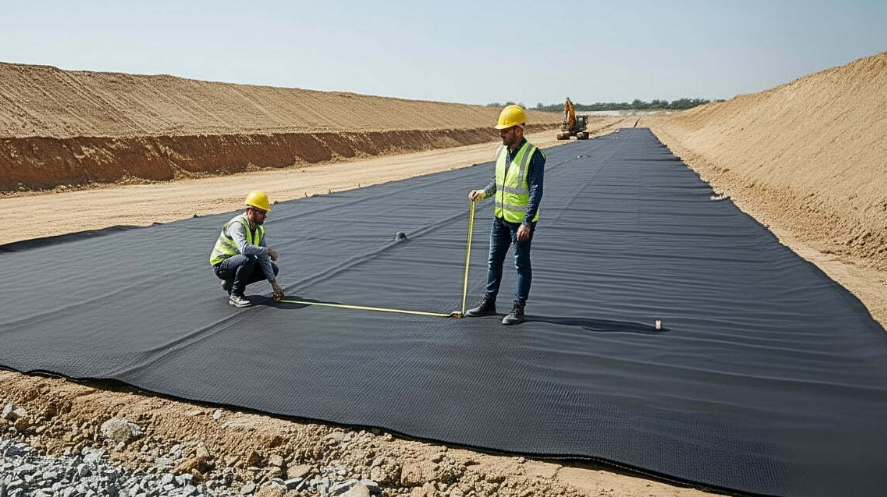
Introduction to a quoi sert le geotextile
In civil engineering and construction, geotextiles play a vital role in stabilizing soil, improving drainage, and preventing erosion. The question a quoi sert le geotextile translates to “what is geotextile used for?” and highlights its multifunctional applications in modern infrastructure projects.
Geotextiles are widely applied in roads, retaining walls, drainage systems, landfills, and coastal protection works. Their ability to separate soil layers, filter water, and reinforce ground makes them indispensable for long-term durability and performance.
What Is geotextile?
Geotextile is a permeable fabric made from synthetic fibers such as polypropylene or polyester. It can be woven or nonwoven and provides the following functions:
- Soil separation
- Filtration of fine soil particles
- Drainage support
- Erosion control
- Subgrade reinforcement
By allowing water to pass while preventing soil migration, geotextiles ensure structural stability and proper drainage in various construction applications.
Uses of geotextile (a quoi sert le geotextile)
Road and Highway Construction
Geotextiles are used to separate subgrade soil from aggregate base layers. This prevents mixing, improves road stability, reduces settlement, and extends pavement lifespan.
Retaining Walls
Placed behind retaining walls, geotextiles prevent soil particles from clogging drainage layers, reduce hydrostatic pressure, and maintain water flow behind the wall.
Drainage Systems
In French drains, underdrains, and subsurface drainage systems, geotextiles surround gravel or perforated pipes to allow water infiltration while retaining soil particles.
See also: Label Printer for Small Business: Efficient and Cost-Effective Labeling
Landfills and Environmental Projects
Geotextiles are applied in drainage layers and leachate collection systems to prevent clogging and facilitate efficient fluid transport.
Erosion Control and Coastal Protection
Under riprap, gabions, or other erosion control structures, geotextiles prevent soil washout while allowing water to move freely, stabilizing slopes and shorelines.
Types of Geotextile
Nonwoven Geotextile
Nonwoven geotextiles are produced by bonding fibers through needle-punching or thermal processes. They are ideal for filtration and drainage applications due to high permeability.
Woven Geotextile
Woven geotextiles are made by interlacing yarns, providing high tensile strength for soil reinforcement and applications requiring both filtration and structural support.
Advantages of Using Geotextile
- Lightweight and easy to install
- Provides consistent filtration performance
- Reduces construction material requirements
- Cost-effective and durable
- Supports sustainable and long-lasting infrastructure
Geotextiles offer an efficient and environmentally responsible solution to common engineering challenges, making them a practical choice for various projects.
Design and Installation Considerations
Soil Compatibility
Select the appropriate geotextile type and opening size for the soil to prevent clogging and ensure effective filtration.
Hydraulic Conditions
Consider water flow rates and pressures when choosing fabric permeability to ensure proper drainage.
Installation Practices
Level the subgrade, overlap fabric seams properly, and place aggregates carefully to avoid tearing or displacement.
Environmental Protection
Cover exposed fabrics promptly to prevent UV damage and maintain long-term durability.
Contribution to Sustainable Construction
By reducing soil erosion, improving drainage efficiency, and extending the service life of structures, geotextiles contribute to sustainable and cost-effective infrastructure development.
Conclusion
Understanding “a quoi sert le geotextile” highlights its critical role in construction for soil stabilization, drainage, and erosion control. Its ability to allow water to pass while retaining soil particles ensures long-term structural stability in roads, retaining walls, drainage systems, and environmental projects.
Proper selection, design, and installation of geotextiles maximize filtration efficiency, prevent soil migration, and support sustainable construction practices.
Frequently Asked Questions
A quoi sert le geotextile?
It is used for soil separation, filtration, drainage support, erosion control, and reinforcement in construction projects.
Which type of geotextile should I choose?
Nonwoven geotextiles are preferred for filtration and drainage, while woven geotextiles provide added tensile strength for reinforcement.
Can geotextiles prevent hydrostatic pressure?
Yes, they allow water to drain efficiently, reducing hydrostatic pressure behind retaining walls.
How long does geotextile last?
With proper installation and UV protection, geotextiles can last several decades.
Is geotextile environmentally friendly?
Yes, geotextiles help control erosion, improve drainage efficiency, and support sustainable construction practices.