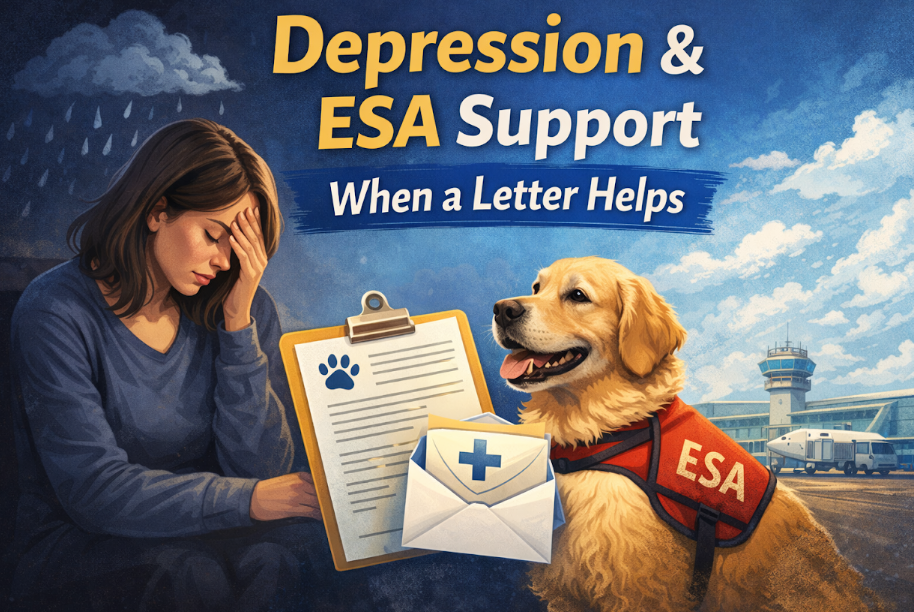
Living with depression often feels heavy and isolating. Days blur together, motivation slips away, and even the smallest tasks can feel impossible. For many people, support animals bring calm, comfort, and a sense of safety. This is where an emotional support animal (ESA) can make a real difference.
However, having an ESA isn’t just about keeping a pet; it often requires an official ESA letter from a licensed clinician for the treatment of depression. That letter confirms your need and helps protect your housing rights. Let’s walk through who qualifies, how clinicians evaluate, and what you can do to prepare for the process.
Why ESAs Help
An emotional support animal isn’t a trained service dog. Instead, their role is emotional. They give comfort, reduce stress, and create stability in a person’s daily life.
Symptoms & Examples
If you’re struggling with depression, you may relate to some of these experiences:
- Long periods of sadness or emptiness
- Trouble focusing or completing tasks
- Feeling hopeless or stuck
- Lack of motivation to get out of bed
- Social withdrawal or avoiding people
- Sleep issues, too much or too little
An ESA can help in practical ways:
- Offering routine (feeding, walking, grooming)
- Providing companionship to reduce loneliness
- Calming panic or anxiety episodes
- Encouraging social interaction when out with the animal
- Giving unconditional affection
That bond often becomes an anchor, helping people navigate depression with more stability.
Who Typically Qualifies
Not everyone qualifies for an ESA letter. Clinicians look for recognized mental health conditions that significantly impact daily life. Depression is one of the most common, but it’s not the only qualifying condition.
Qualifying Conditions
Here are some conditions often supported by an ESA recommendation:
- Major depressive disorder
- Generalized anxiety disorder
- Post-traumatic stress disorder (PTSD)
- Bipolar disorder
- Panic disorder
- Phobias or social anxiety
- Adjustment disorders
Clinicians assess if your condition limits basic life activities and whether an ESA could help. The letter doesn’t serve as a cure, but it recognizes that an ESA is a valid part of your mental health support system.
How Clinicians Evaluate
When you ask for a depression ESA letter, your clinician doesn’t just hand it over. They follow a process to ensure it’s medically appropriate.
- Clinical History Review – Your therapist or doctor looks at your mental health background, symptoms, and ongoing treatment.
- Current Symptoms Discussion – They ask how depression affects your daily life: work, school, relationships, or personal care.
- ESA Role Assessment – They evaluate if an animal genuinely provides support and whether it fits your treatment plan.
- Letter Issuance – If appropriate, they draft official documentation that states your condition and the therapeutic role of an ESA.
What Not to Say in Evaluations
Many people get nervous before these evaluations. It’s natural to wonder how much detail to share. Here are some mistakes to avoid:
- Downplaying symptoms – If you act like everything is fine, the clinician may not see a need.
- Exaggerating issues – Clinicians can usually tell if you’re overstating. It may cause them to question your request.
- Only talking about wanting a pet – Frame your answers around mental health needs, not just convenience or preference.
Be honest, open, and clear. Your clinician’s goal is to understand your struggles and determine if an ESA truly helps.
How to Prepare for Your Consultation
Walking into a consultation with your therapist or doctor can feel overwhelming, especially when the goal is to discuss something as personal as your depression. Preparing ahead of time helps you organize your thoughts, reduce anxiety, and explain your needs more clearly. Here are some ways to get ready:
- Track your symptoms – Depression looks different day to day. Keep a small journal of your moods, sleep habits, appetite, and energy levels. For example, you might record nights when you sleep only a few hours, or days when you oversleep but still feel tired. These details help your clinician see patterns.
- Write down examples from daily life – Instead of just saying, “I feel down,” describe real situations. Maybe you’ve missed work because you couldn’t get out of bed, skipped classes, or avoided social gatherings. Sharing these experiences makes your struggles easier to understand.
- Explain how an ESA helps you – Be ready to talk about the comfort and stability your animal provides. For instance, you might say that your dog motivates you to go outside for walks, or that sitting with your cat eases panic and loneliness. The more specific you are, the stronger your case becomes.
- Bring any past records – If you’ve had treatment before, like therapy notes or a diagnosis, bring that with you. Prior records give your clinician background and make it easier for them to understand your mental health history.
- Stay open and honest – Clinicians are not looking for perfect answers. They value sincerity over rehearsed statements. If you have trouble finding words, that’s okay. Just speak honestly about how you feel and what life looks like for you.
If you feel an ESA could help, getting your depression ESA letter doesn’t have to be overwhelming. Our team at Paw Tenant makes the process easier with trusted clinicians and secure documentation.
See also: Vitamin C Brightening Serum: The Ultimate Guide to Radiant, Healthier Skin
Housing Request Tips
One of the biggest reasons people seek a depression ESA letter is housing. Many landlords do not allow pets or charge heavy fees. An ESA letter changes that. Under the Fair Housing Act, landlords must make reasonable accommodations for tenants with emotional support animals. That means you cannot be denied housing just because you need an ESA, and you cannot be forced to pay extra pet rent or deposits.
But in practice, housing requests often feel complicated. Some landlords are not familiar with ESA rules, while others push back with unnecessary paperwork. The key is presenting your request calmly and clearly. A strong, valid ESA letter is your best protection. When you share it, explain that it comes from a licensed professional and outlines your qualifying condition without revealing private medical details.
Sometimes landlords ask questions that cross into your personal health history. Remember, they are not entitled to your full medical file. The only thing they need is official confirmation that you have a qualifying condition and that an ESA is part of your treatment. If you feel overwhelmed, refer them back to the law or direct them to resources. A confident but respectful approach usually resolves most housing issues.
Conclusion
Depression is not easy to live with. It steals energy, clouds judgment, and often makes the world feel smaller than it is. For many, an emotional support animal provides a steady light in that fog. The presence of a dog, cat, or other companion can ease the weight of loneliness, bring back structure, and give comfort when words are not enough.
Getting a depression ESA letter is about more than paperwork. It is about recognition, that your struggles are real, that support matters, and that your bond with an animal has value in your healing process. Whether you are meeting with your therapist for the first time or preparing to submit your letter to a landlord, approach the process with honesty and calm confidence. You are not asking for special treatment. You are asking for fair support under the law, and that is something you fully deserve.
If you are ready to take the next step, we are here to help. At Paw Tenant, we connect you with licensed professionals who understand both mental health and ESA law. You do not have to face confusing rules or landlord pushback on your own.
Visit our ESA Packages today and start your journey toward peace of mind. Your depression ESA letter could be the bridge to stability, comfort, and the support you deserve.
FAQs
Q1: What is a depression ESA letter?
It is a document from a licensed clinician confirming that you live with depression and that an emotional support animal is part of your treatment plan. It gives you legal protection in housing situations.
Q2: How do I talk to my therapist about it?
Keep it simple. Share how depression affects your life and explain how an animal helps you manage. Therapists are used to these conversations and will guide you through their evaluation process.
Q3: Do I need to be in therapy already to qualify?
Not always. Some clinicians may require ongoing treatment before issuing a letter, but others can provide an evaluation specifically for an ESA. The most important part is being honest about your symptoms and history.
Q4: Will my letter last forever?
Most ESA letters are valid for one year. Renewals are common, and many clinicians require a quick check-in to ensure the support animal is still beneficial for your treatment.
Q5: Can my landlord refuse my ESA?
In most cases, no. The Fair Housing Act protects you from being denied housing due to your ESA. There are limited exceptions, such as housing owned by small landlords who live on the property themselves.
Q6: What if my depression feels mild, do I still qualify?
Qualification is not based on how “severe” your depression looks to others. If it disrupts your daily life and an animal provides measurable relief, you may still qualify. That is why the evaluation process is so important.